
 Saqib K
Sceye HAPS Specs Payload, Endurance, And Battery Breakthroughs
1. Specifications will tell you what the Platform is able to do
There's a tendency within the HAPS sector to talk about goals instead of engineering. Press releases outline coverage areas Partnership agreements, coverage areas, as well as commercial timelines, but the more difficult and more revealing conversation is about specifications – what exactly the vehicle is carrying and how long it remains on the road, and which energy systems make sustainable operation feasible. For those trying to discern whether a platform that is stratospheric is actually mission-ready or in the prototype phase, performance of the payload, endurance measurements and battery power are where the meat of the matter lives. The vague promises of "long endurance" and "significant payload" are not difficult to understand. Delivering both at the same time in stratospheric height is the engineering hurdle that differentiates credible programs from announcements that are wildly ambitious.
2. A Lighter-than Air Architecture Changes the Payload Equation
The principal reason that Sceye's Airship design can support a significant payload is due to buoyancy handling the primary task of keeping the vehicle in air. This is not an insignificant distinction. Fixed-wing solar aircrafts have to generate aerodynamic lifting continuously which uses energy and imposes structural constraints which limit the extra weight the vehicle can transport. Airships floating at equilibrium within the stratosphere, doesn't need to use energy fighting gravity in the same way, thus the power generated by the solar array and also the structural capacity of the vehicle, could be directed towards stations keeping, propulsion and payload operation. This results in a payload capability that fixed-wing HAPS designs at comparable endurance really struggle to match.
3. Payload Capacity determinant mission scalability
The value of a greater capacity payloads becomes apparent when you take a look at what stratospheric projects actually call for. A payload in telecommunications – antenna systems and signal processing hardware beamforming equipment has real weight and volume. So does a greenhouse gas monitoring suite. The same goes for a wildfire detection in the form of an Earth observation. Any of these mission successfully requires hardware that has mass. The simultaneous running of multiple missions requires more. Sceye's airship specifications are crafted around the principle of a stratospheric platform to be able to carry a genuinely efficient mix of payloads than forcing users to choose between observation and connectivity, since the vehicle can't accommodate both at once.
4. Endurance Is Where Stratospheric Missions are Winners or losers
A platform that reaches the stratospheric height for up to 48 hours before needing to drop is useful for demonstrations. A platform that stays in place for weeks or months at it is very useful in making commercial services. The difference between those two outcomes is an energy based issue — specifically, whether or not the vehicle can produce sufficient solar power during daylight to power all of its systems and charge its batteries enough to provide full function through the night. Sceye endurance targets are based around this diurnal cycle challenge in which we consider the ability to sustain energy for the entire night not as a stretch target but as a basic of the design criteria that everything else is designed around.
5. Lithium-Sulfur Batteries are a Real Step in the Right Direction
The battery chemistry powering conventional electronic devices and electric vehicles — primarily lithium-ion. It has energy density characteristics that pose real challenges for applications that require stratospheric endurance. Every kilogram of mass carried up is an ounce not available as payload. Yet, you require enough energy stored in order to keep the large platform operating through a stratospheric night. The chemistry of lithium sulfur alters this balance dramatically. With energy density values that reach 425 Wh/kg lithium-sulfur batteries will store significantly more power per pound than similar lithium-ion cells. For a vehicle weighing a lot, in which every Gram of battery mass will have an opportunity cost in payload capacity improvement in energy density doesn't just happen small, it's significant.
6. Improved Solar Cell Efficiency Are the other half of the Energy Story
Battery energy density determines how much energy is stored in your battery. Solar cell efficiency determines how quickly you are able to replenish it. Both of them are crucial, and advancement with one without growth in the other results in a more lopsided energy structure. High-efficiency photovoltaic technology with multi-junction design that take in a wider spectrum of solar energy than conventional silicon cells — have significantly improved the power harvesting capacity of solar-powered HAPS vehicles at all hours. Combined with lithium-sulfur storage, these advances make an effective closed power loop achievable: generating and storing enough energy per day to power all systems without the use of external energy sources.
7. Station-Keeping Draws Constantly From the Energy Budget
It's easy enough to define endurance solely in terms maintaining a certain level of altitude, but for an stratospheric platform, staying on the ground is just a part of the equation for energy. Station keeping – actively staying in position despite the wind's stratospheric force with constant propulsion consumes power continuously and makes up major proportion of energy use. The energy budget must support station keeping in conjunction with payload operations, avionics, communications, and thermal management systems simultaneously. This is the reason why specifications that quote endurance without specifying the system that is operating during that duration are difficult to analyze. True endurance statistics assume full operational load, not only a only minimally configured vehicle that coasts with payloads that are turned off.
8. The Diurnal Cycle is the constraint in design that all else is Flows from
Stratospheric engineers focus on the diurnal rhythm — the daily rhythm that determines the amount of solar energy available -as the primary limitation on which the platform is built. In daylight the solar array has to provide enough power for all systems and charge the batteries to sufficient capacity. At night, the batteries have to power all systems up to sunrise without losing position, degrading its payload's performance, or going into any kind of reduced-capability condition that could disrupt a continuous monitoring or connectivity mission. A vehicle that can thread the needle in a consistent manner all day long, over months is the fundamental engineering issue of solar-powered HAPS development. Every decision in the specification — solar array area cell chemistry, battery efficiency, power draw for the payload -each feeds into this governing constraint.
9. It is the New Mexico Development Environment Suits This Kind of Engineering
Testing and developing a stratospheric airship requires infrastructure, airspace, and atmospheric conditions which aren't readily available everywhere. The base of Sceye in New Mexico provides high-altitude launch and recovery capabilities, clear clouds for solar-powered testing along with access to type of prolonged, uninterrupted airspace tests on flight for sustained periods of time. As a company in the aerospace industry of New Mexico, Sceye occupies a distinctive position — that focuses on stratospheric lighter, than-air techniques rather than traditional rocket launch plans used in New Mexico. Its engineering rigor to verify endurance claims and the performance of batteries under real-world stratospheric conditions is precisely the type of work which benefits from a dedicated test environment in contrast to the more impulsive flight programs that exist elsewhere.
10. specifications that are able to withstand Scrutiny Are What Commercial Partners are looking for.
In the end what makes specifications matter beyond technical interest is that commercial partners making investment decisions need to know that the figures are true. SoftBank's decision to build a national HAPS network within Japan and announcing pre-commercial services by 2026, is based on the assurance that Sceye's system will perform as described in operating conditions — not just in controlled tests, but sustained throughout the time commercial networks require. Payload capacity that holds up with a complete telecommunications and observation suites endurance numbers that are verified through actual operations on the stratosphere, as well as battery performance proven over real diurnal cycle are what transform an exciting aerospace project into a infrastructure that major telecoms operator is prepared to stake its network plans on. See the most popular what does haps for site info including sceye softbank partnership, sceye haps softbank partnership details, sceye haps airship payload capacity, sceye haps airship payload capacity, softbank haps pre-commercial services 2026 japan, High altitude platform station, Stratospheric infrastructure, sceye haps status 2025, high-altitude platform stations definition and characteristics, softbank haps and more.
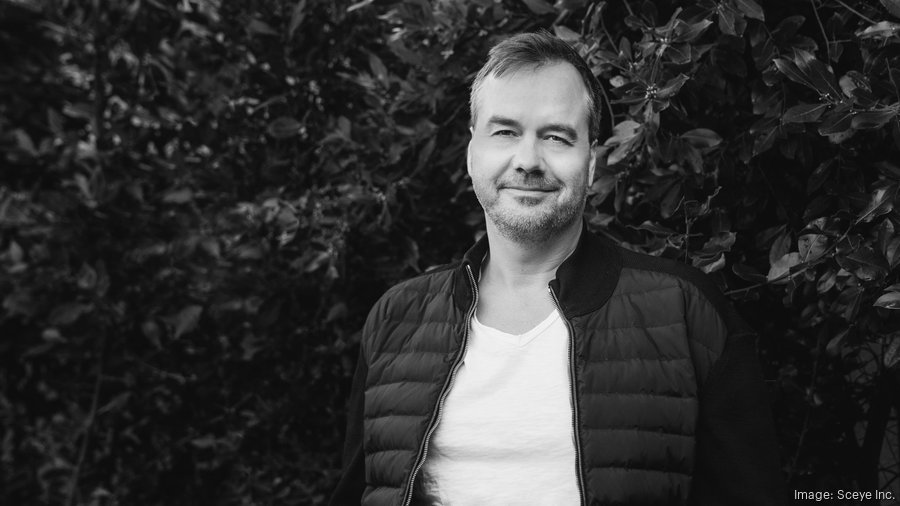
Mikkel Vestergaard's Vision Behind Sceye's Aerospace Mission
1. It's a largely under-rated factor within Aerospace Company Outcomes
The aerospace industry is one of two broad categories of firms. The first is built around the search for applications of technology as well as an engineering expertise looking for a market. The second takes a problem that is of importance and moves backwards towards the technology for addressing the issue. This may sound like a logical distinction until you take a look at what each kind of firm actually produces along with the kind of partnerships it makes, and how it makes trade-offs when resources are constrained. Sceye fits into the second group, and understanding how it operates is vital to understanding why the company chose the specific decision-making choices in engineering -it's lighter than air design and multi-mission payloads, focus on endurance, and an initial site at New Mexico rather than the coastal aerospace clusters that attracted many venture-backed space businesses.
2. The issue Vestergaard Initiated With was Much More than Connectivity
The majority of HAPS companies find their main narrative around telecommunications — The connectivity gaps unspent billions of dollars, the economics of connecting remote communities without access to infrastructure on the ground. These are real issues, but they're commercial problems with commercial solutions. Mikkel Vestergaard's starting point was different. His background in applying advanced technology to human and environmental difficulties led to a perspective at Sceye that treats connectivity as an output of the stratospheric infrastructure instead of its primary purpose. Monitoring of greenhouse gas emissions is a key component, as are disaster detection, Earth observation oil pollution surveillance and management of natural resources were part of the mission's infrastructure from the beginning, not additional features later added to make the telecoms platform appear more socially conscious.
3. The Multi-Mission Platform Is a direct expression of that Vision
If you consider that the first question that was asked was how the stratospheric infrastructure can address the world's most significant problem of connectivity and monitoring simultaneously, the multipayload platform is no longer a smart commercial strategy, and it starts to look as the most sensible answer to the question. A platform that carries technology for telecommunications, along with real-time methane monitoring sensors as well as technology to detect wildfires isn't striving in a way to please everyone and is expressing a coherent view that the issues to be addressed from the stratosphere are interconnected and a vehicle that is that can address a number of them simultaneously is more in line with the purpose than a device optimized for one revenue stream.
4. New Mexico Was a Deliberate choice, not an accidental One
Sceye's location within New Mexico reflects practical engineering requirements, such as access to airspace, atmospheric testing conditions, capability to climb altitudes — but also reveals something about the business's identity. The well-established aerospace industries of California and Texas have attracted companies whose principal audience is investors, defence contractors, and the media ecosystem that covers these areas. New Mexico offers something different by providing the environment for the actual work of the development and testing of stratospheric lightweight-than-air devices without the performance pressure of being in close proximity to those who support and write about aerospace. As one of the aerospace companies in New Mexico, Sceye has built a development programme oriented towards engineering validation instead of public narrative. A decision that is a reflection of a founder who is more concerned about whether the platform actually works instead of whether it has spectacular announcement cycles.
5. Endurance as a Design Priority Reflects a Long-Term Mission Orientation
Short-endurance HAPS platforms are intriguing demonstrations. Long-endurance platforms are a type of infrastructure. The emphasis on Sceye for its endurance — building vehicles that can keep stations for months or years rather than days — indicates a belief in the founder's view of the difficulties that need to be addressed from the stratosphere can't be solved them between flights. Greenhouse gas monitoring that runs for about a week then goes dark, produces a recording with no scientific or regulatory significance. Emergency response that requires an apparatus that needs to be repositioned and relaunched at the end of each deployment isn't a permanent early warning system that emergency managers require. The endurance requirement is an indication of what the needs of the mission are and is not a performance measure that is merely a means to measure.
6. Humanitarian Lens Shapes Partnerships Humanitarian Lens Shapes Which Partnerships are Prioritised
It is not every partnership worthwhile as the criteria the company employs to judge potential collaborators is revealing about its business goals. Sceye's association with SoftBank on Japan's HAPS network — which targets pre-commercial services starting in 2026is noteworthy not only due to its commercial scope, but for its alignment with a country that genuinely needs the services that stratospheric infrastructure offers. Japan's seismic exposure, complex geography, and involvement in monitoring of the environment makes the ideal deployment environment where the platform's multipurpose capabilities meet real-world needs rather than earning revenue in a space that has alternatives. This alignment between commercial partnerships with mission and partnership is not unintentional.
7. Investment in Future Technologies Requires Conviction About the issue
Sceye operates in a learning environment that the technologies it is relying on lithium-sulfur batteries that have 425 Wh/kg energy densities, high-efficiency solar cells designed for stratospheric aircrafts, and advanced beamforming to make stratospheric radio antennas — are in the forefront of what is currently feasible. The development of a business plan around technologies which are improving, but are not yet fully mature requires a leader with an understanding on the significance of the issue in order to justify the time-based risk. Vestergaard's belief that the stratospheric network will eventually become a permanent component of global monitoring and connectivity architecture will be the foundation for investing in the future of technologies that will not get to their fullest operational capacity until the platform on which they operate is flying commercially.
8. The Environmental Monitoring Mission Has Become More Important Since Its Founding
One of the advantages of founding a company around an actual problem rather than the latest technology trend is that the problem can become much more rather and less relevant over time. When Sceye was founded, it was clear that there was a compelling argument that continued monitoring of greenhouse gases in the stratosphere, wildfire detection, and weather-related monitoring was strong in principle. In the intervening years rapid growth in wildfire seasons greater scrutiny of methane emissions through international climate frameworks and the apparent shortcomings of the existing monitoring infrastructure have all bolstered the case significantly. The vision of the founding document hasn't had for revision in order to stay applicable ? the world has moved towards it.
9. The careers at Sceye Represent the Breadth of the Mission
The spectrum of disciplines required to build and operate stratospheric structures for multi-missions exceeds what the majority of aerospace programmes require. Sceye careers encompass sciences of the atmosphere, materials engineering, telecoms, power systems, remote sensing, software development, and regulatory affairs — A cross-disciplinary profile that illustrates the vastness of what Sceye is designed to accomplish. Companies that are founded on a single-use technology usually hire only within the discipline of that technology. Companies whose core is a problem that requires multiple converging technology to solve hire across the boundaries of these disciplines. The persona of the talent Sceye recruits and creates is a reflection on Sceye's vision for the future.
10. The Vision Works Because It's Specific about the issue And Not the Solution
The most durable visions for the foundation within technology firms are precise about the problem that they're attempting to solve and flexible about the ways to solve it. The frame of reference — the persistent stratospheric network for monitoring, connectivity, and environmental observations is sufficiently specific to generate clear engineering requirements and clear partnerships criteria, yet flexible enough to accommodate the evolution of the enabling technologies. As battery chemistry gets better, as solar cell efficiency improves, as HIBS standards are refined, and as the regulatory framework that governs stratospheric operations is created, Sceye's mission remains the same and its approach to executing that mission is able to incorporate the most current technology at each stage. This structure- fixed on the problem and reliant on the solution — is the reason why the aerospace mission has continuity across a development time line determined in years rather than cycle of products. See the most popular Beamforming in telecommunications for website tips including what are high-altitude platform stations haps definition, Mikkel Vestergaard, Sceye endurance, whats haps, Stratospheric platforms, sceye softbank partnership, Station keeping, what is haps, Sceye Wireless connectivity, aerospace companies in new mexico and more.
